
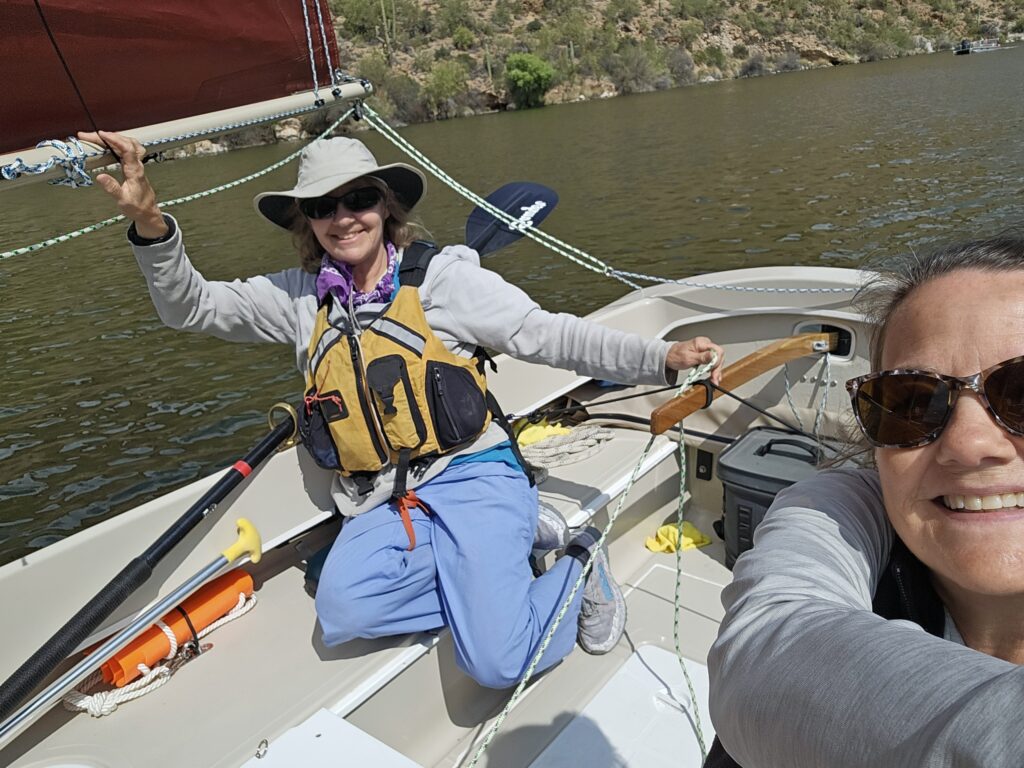
Sally, Carol, and their 12′ Scamp sailboat are back on the water — this time trading the familiar shores of Saguaro Lake for the more dramatic, and unpredictable, Canyon Lake.
By Sally Marks and Carol Brokschmidt, M.D. | Photos by Lisa Gifford and Sanja Broda
Mackerel Skies
It started while preparing breakfast. The bright sunlight that normally streams in through the sliding glass door seemed darker than usual. An overcast, or marbled sky, is not unusual in many places, but it is worth noting in sunny Arizona. Carol and I glanced outside and viewed the mackerel heavens above the desertscape surrounding our home. I thought of the upcoming sailing excursion of my partner, Carol, and her sister, Lisa.
“Looks like Carol and Lisa are going to have some unusual weather when they take the SCAMP out this morning,” I thought to myself. I wasn’t sure if I should be worried, or thankful, that I couldn’t make the trip this time.
The dappled, swirled clouds resembled the veins of marbled stone. Cloud cover is generally a relief when sailing in the broiling Arizona sun, but this looked different. I later learned that a mackerel sky is a signal of a change in the weather and an approaching warm front.
A Different Sailing Story
It was to be a harbinger of a divergent sailing adventure than the relaxing jaunt we experienced when launching our 12-foot SCAMP on Saguaro Lake weeks before. Read that story here.
Today’s outing to Canyon Lake might be a different journey, but not one to miss. There was a short window of opportunity to sail at the picturesque reservoir before it is scheduled to close on Sept. 16, 2026 for repairs. During the 16-week closure Salt River Project and the U.S. Bureau of Reclamation will engage in a variety of servicing activities. According to the SRP website, the maintenance will include safety inspections, repairs to Mormon Flat Dam, as well as maintenance on the downstream river channel to ensure reliability and safety.
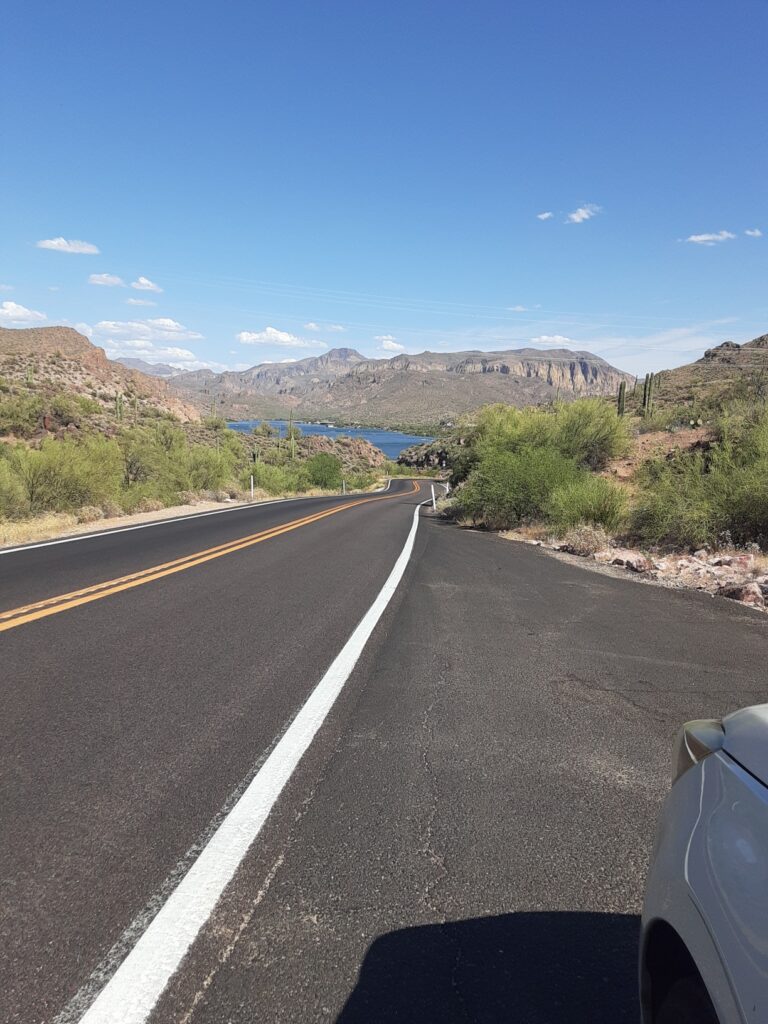
Because Saguaro and Canyon Lake are only 33.7 miles apart, one would expect the second sailing outing would be like our earlier day trip. Of course no two sailing excursions are ever the same. However, on both adventures, the desert views were spectacular. Even the drive to the destination is a magnificent trek to behold. In springtime one can see yellow brittle bush, desert mallow in a variety of hues (particularly amber blossoms on this trip) and dusty magenta lupine. Year round, those who take the journey on Highway 88 to Canyon Lake will encounter a sea of Saguaro cacti that stand like sentries at the base of the majestic Superstition Mountains.
The road is paved, but twists and winds along steep cliff edges. The speed limit ranges from 15 to 40 miles per hour. The low speed is not to be ignored – one for safety, but another advantage is it provides a slower journey so drivers and passengers can enjoy the breathtaking surroundings. Those who have an urge to speed may want to choose a different destination. Fortunately, towing the SCAMP was effortless even on this circuitous route.
A Little History About Canyon Lake
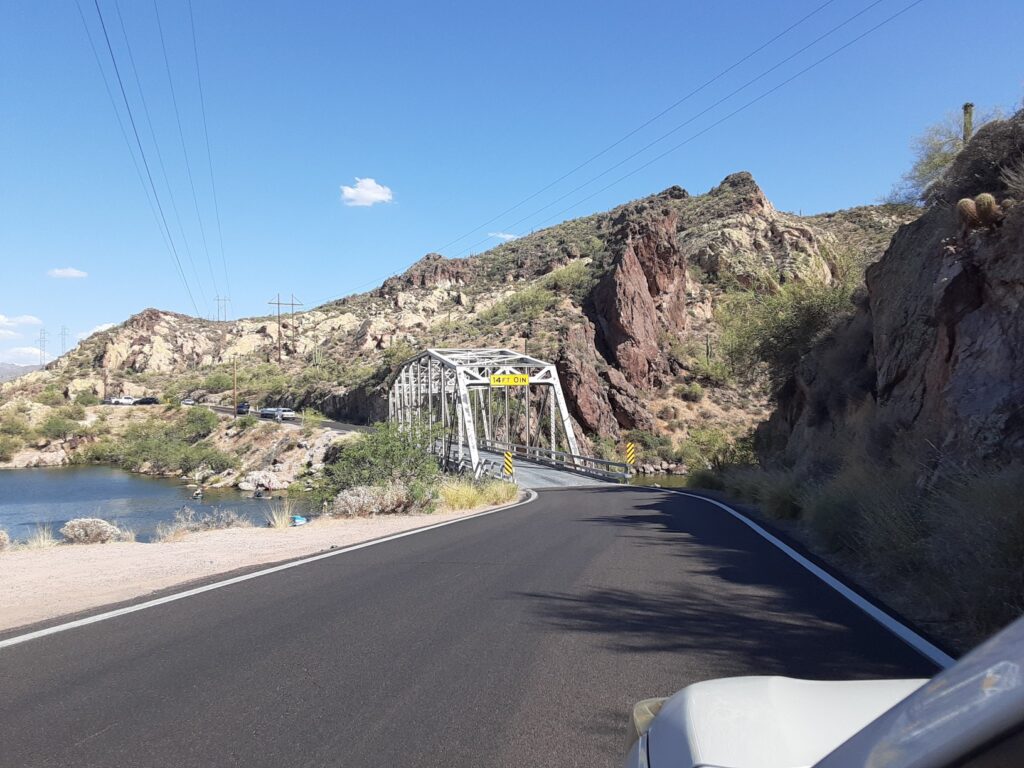
As you drop into the lake basin area, there is a historic one-lane truss bridge that welcomes visitors. Construction of the historic metal ramp began in 1924 to support the Mormon Flat Dam development and is an integral part of the passage to the nearby lake.
The popular recreation spot is part of a 10-mile long chain of reservoirs on the Salt River that were created with the building of Stewart Mountain Dam in 1930. The dam, and resulting reservoirs, include Apache Lake, Saguaro Lake, Canyon Lake and Theodore Roosevelt lakes. Nearly 100 years after its construction, the dam continues to provide hydroelectric power and water storage for Phoenix and its surrounding areas.
Small but Scenic
Canyon Lake is the smallest of the chain of reservoirs and includes some 950 acres (approximately 1.48 square miles) but is considered by many to be the most picturesque. While this trip was the first time the SCAMP had set sail in this particular, desert body of water, it was not the first time we had visited the popular recreation site. Like many folks, we had been lured to the beauty of the area along with countless others who enjoy swimming, boating, fishing, picnicking, as well as bird watching and observing desert wildlife.
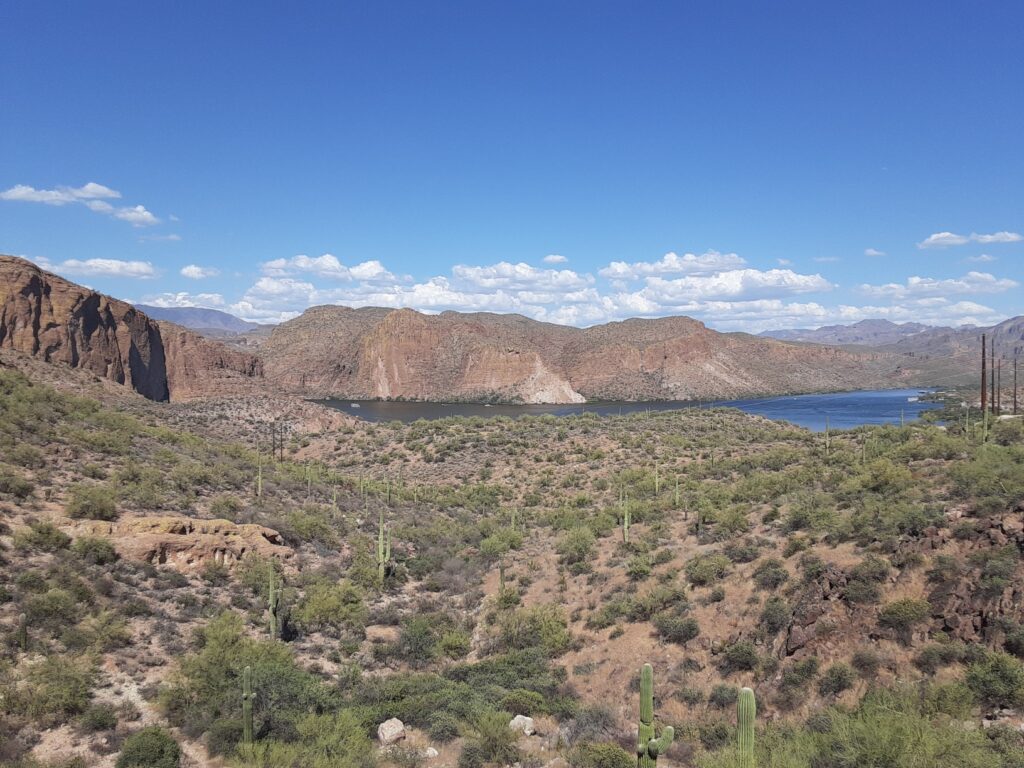
While Carol and Lisa share a love of the outdoors with other lake enthusiasts, there was one distinction — they were the only ones prepared to sail.
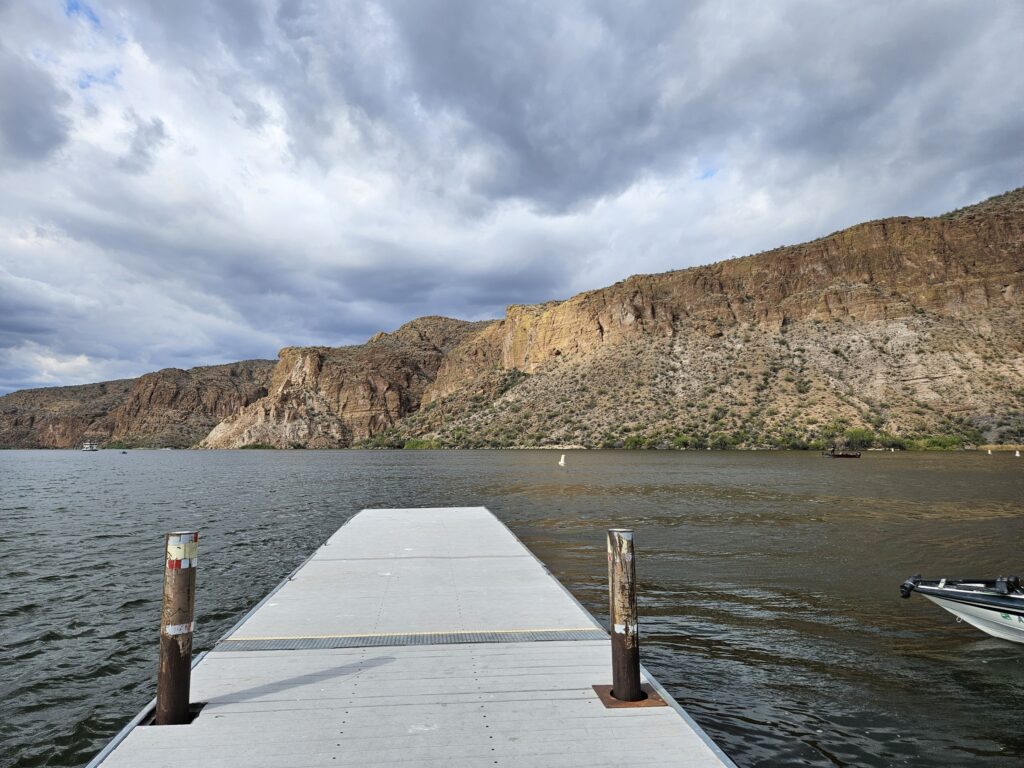
Faster Rigging
The temperature was cool and Carol and Lisa rigged the boat faster than before, however, we still recommend reviewing the Gig Harbor Boat Works rigging video before setting sail. We also outline a few rigging tips in one of our earlier stories.
With the rigging complete, Carol backed the boat into the lake while Lisa waited to tie the SCAMP to the dock cleats.
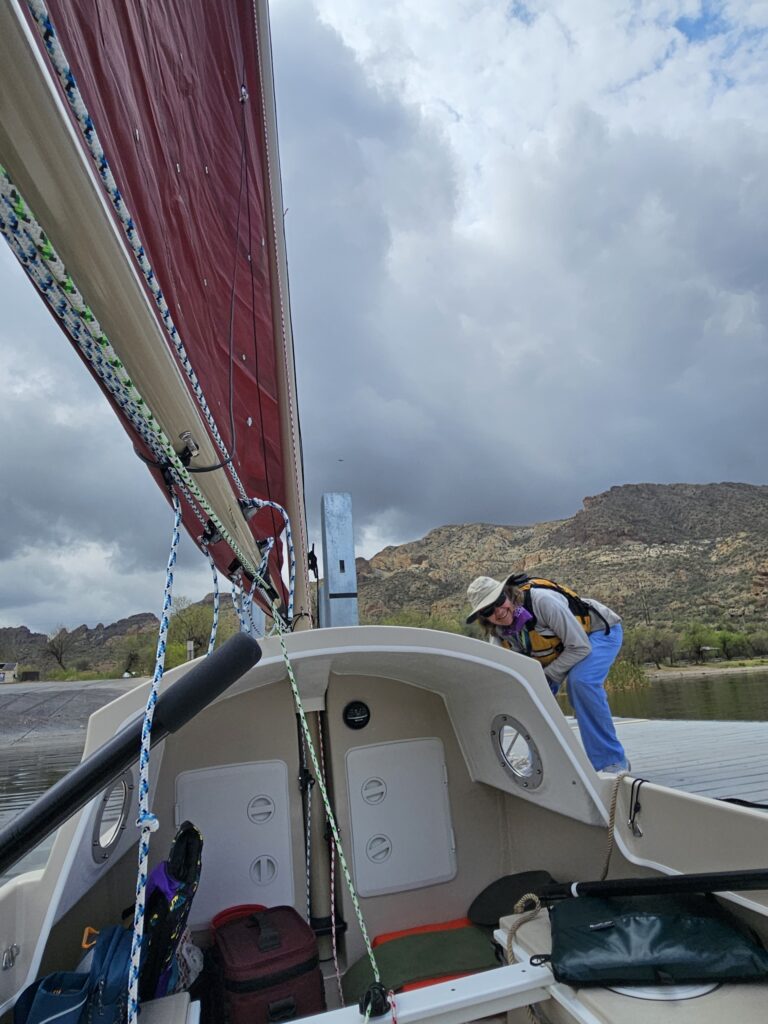
Uh Oh!
It was a long wait.
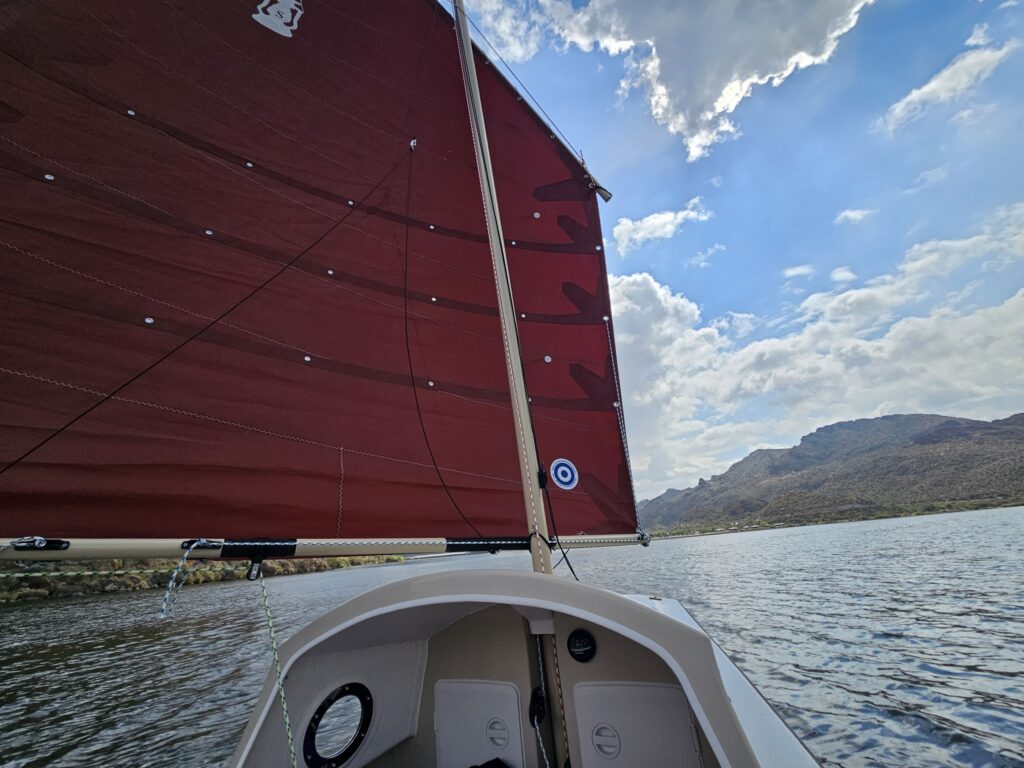
The boat didn’t float off its trailer, nor would it float back on. Carol needed to get a better look to access the problem. She climbed onto the trailer tongue and saw the centerboard line had caught on a paddle. This prevented the centerboard from engaging in the upright position. Carol tried to pull the board up, but couldn’t from her current location. She climbed out and waded into the water. Using the reboarding ladder she was able to reach into the SCAMP, but still no luck. She rocked the boat back and forth and finally the centerboard slipped into place. Lisa pulled the lines and was able to coax the SCAMP off the trailer.
Rather than being upset, Carol said she used the opportunity to gain experience boarding the boat from the trailer tongue, as well as the reboarding ladder. Both were more useful options than spewing profanities. In the future she resolves to check to make sure the centerboard line is fully engaged in the jam cleat before backing the SCAMP into the water.
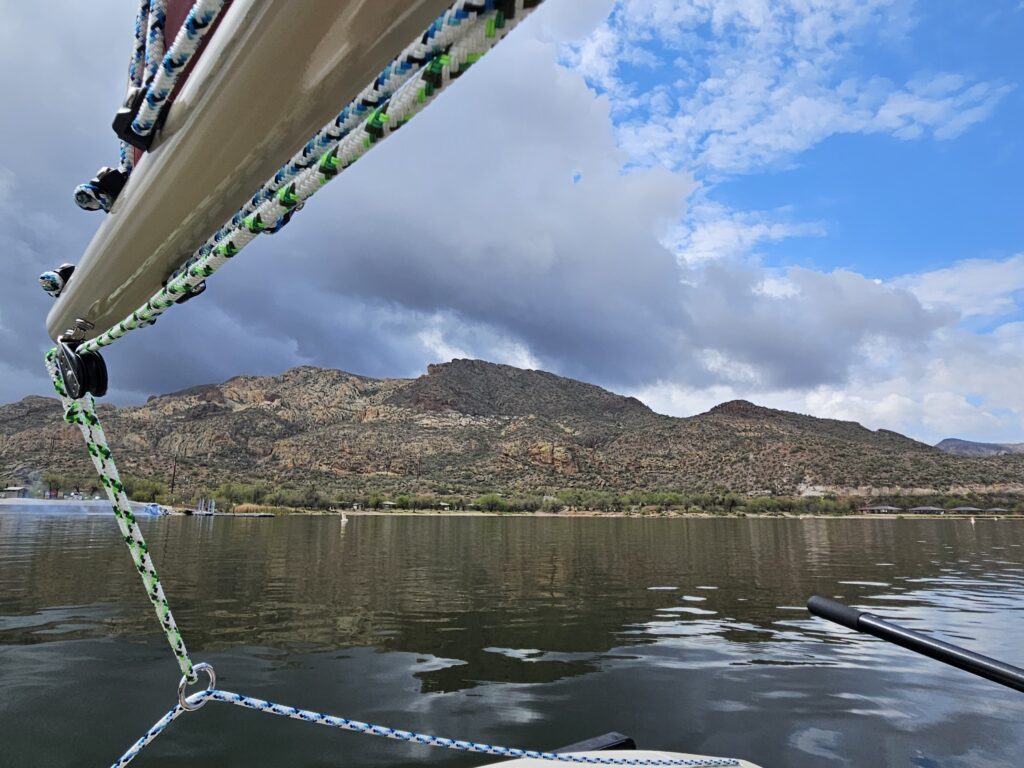
With that setback behind them, Lisa and Carol put up sail and drifted away from the dock. At first the sisters sailed slowly and were passed by kayakers, paddleboarders and perhaps a snail or two.
But that soon changed.
Blowing in the Wind
“All of a sudden the wind piped up, seemingly out of nowhere,” Carol explained. “We were experiencing 15 to 20 mile-per-hour gusts. We started passing the paddleboarders, kayakers and even gave the ‘The Dolly Steamboat’ a run for her money.”
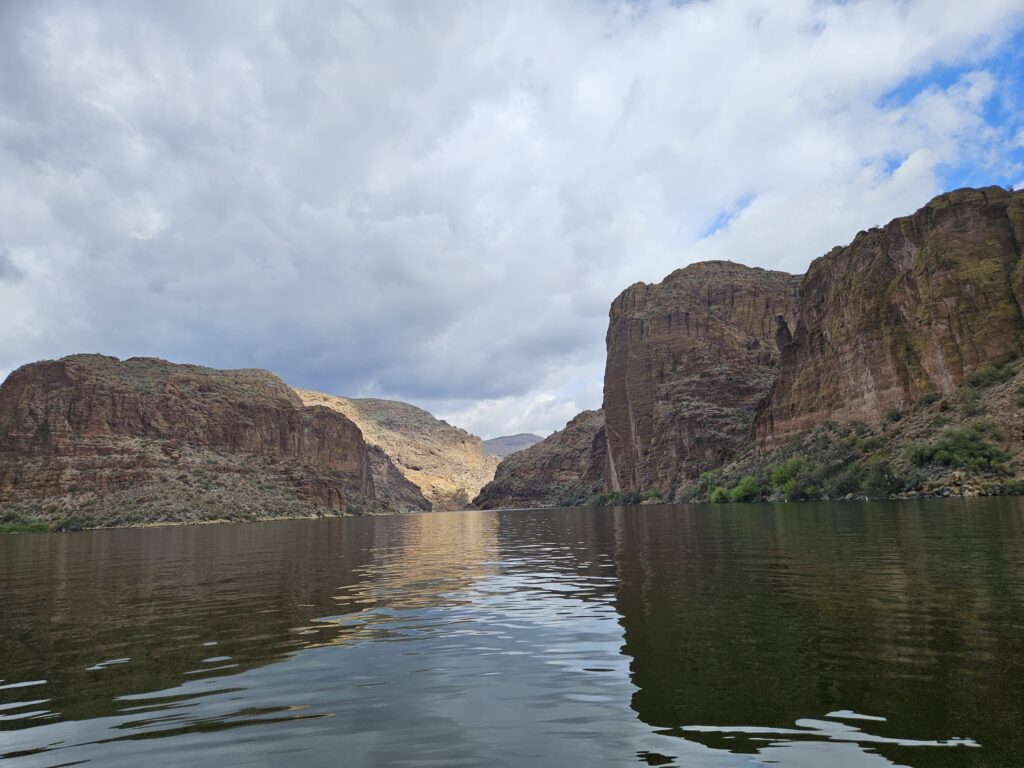
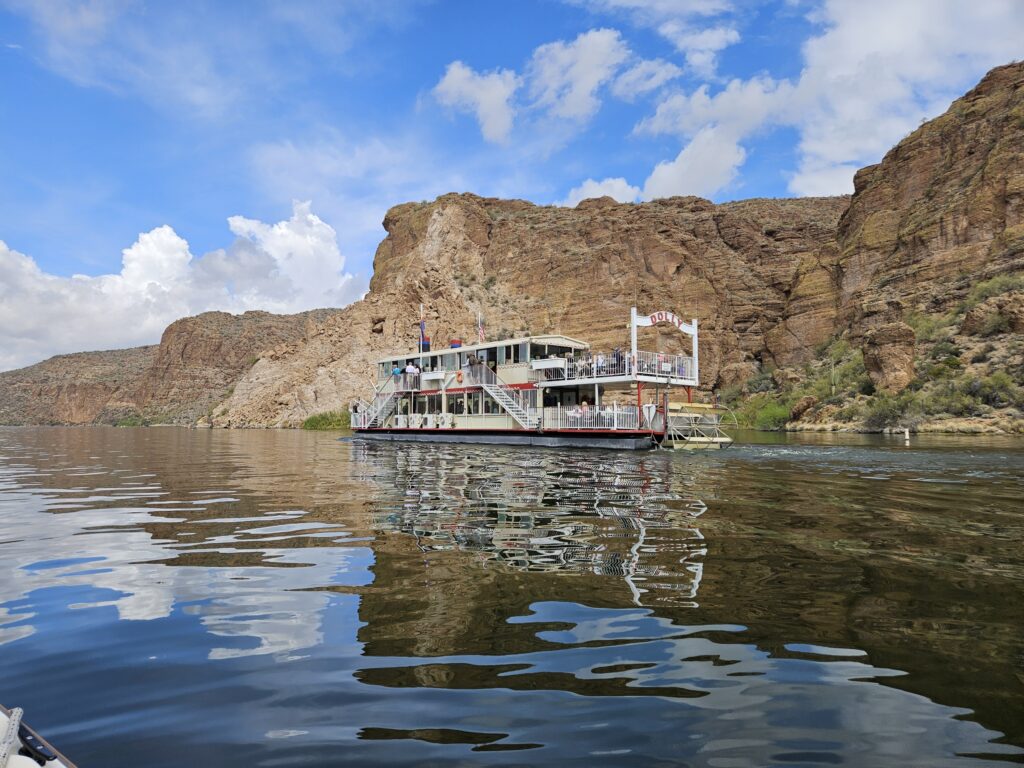
From our prior experience on Saguaro Lake, we were aware of how air current on lakes are flukier due to the friction from trees, hills and buildings, as well as rapid temperature shifts between the water and the land. But these gusts were variable in both direction and speed, and less predictable than in our other outings. Carol wanted to reef the main, but adventurous Lisa wanted to see just how fast the boat could go. The pocket cruiser heeled and scooted briskly on the water at a respectable 4 knots. The SCAMP performed well and proved seaworthy. However, as south winds prevailed, and a narrow part of the lake approached, Carol reefed the main and the two sisters sailed and oared upwind to the dock.
Advice from Gig Harbor Boat Works
Carol noted a few differences in sailing her previous sloop to the SCAMP and contacted Gig Harbor Boat Works for advice prior to her lake trip. Here are two questions and responses. And a big shout out to Katie Strong for her sage sailing guidance.
Question: The SCAMP seems to have a lot of lee helm. Is there anything I can do to change that so I can stay straight in the wind during a reef?
Answer: The SCAMP does sail quite differently from a traditional sloop, so that adjustment period is totally normal! If you’re finding a lot of lee helm, especially in windier conditions, we’d recommend dropping your reef and bring it back up. It should only take about two minutes and you can make a significant difference in how the boat balances.
Question: It seems like the boom really wants to approach the deck and our heads during and after reefing. It’s probably user error, but I want to see if you have any insights on this.
Answer: This one is all about your downhaul. You want to make sure it is pulling the front of the boom down nice and tight – when the front is secured down properly, the back of the boom will naturally rise up and stay out of the way. Make sure your downhaul is very tight and that should resolve the issue.
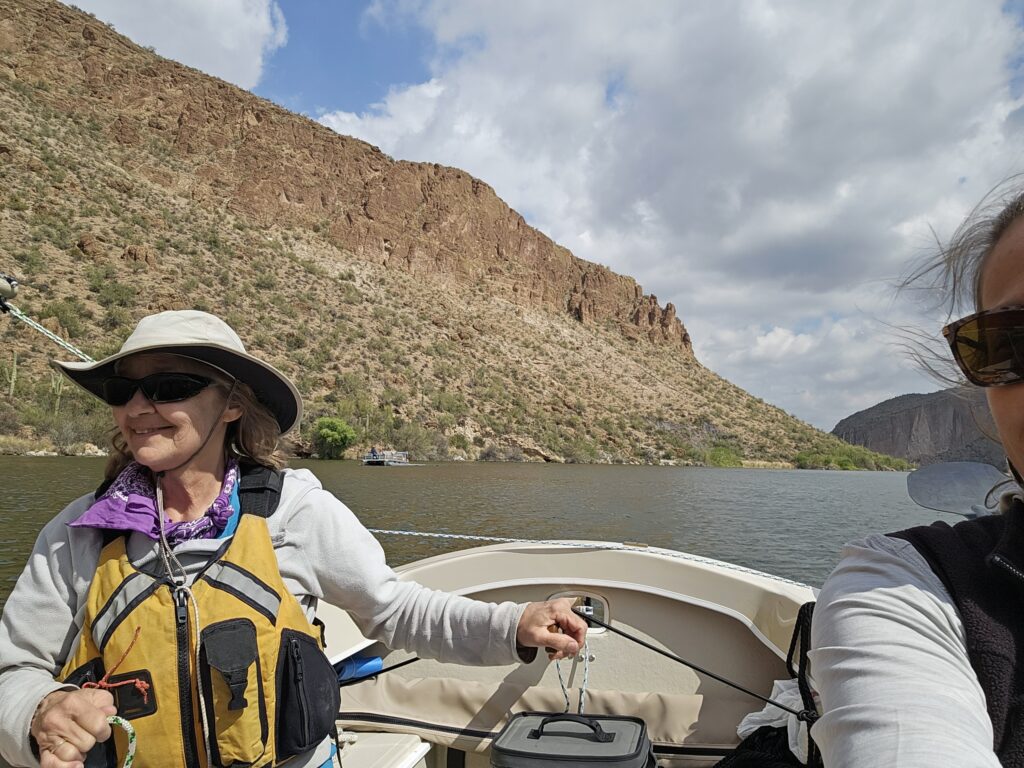
This advice will be incorporated into our future sailing stories, as well as the lessons one naturally learns on each outing. But for now, it was time to head back.
Exiting the lake and derigging the boat went quickly and soon the two returned home. The windblown pair were grinning ear to ear and excitedly told me about their adventure and travails.
What’s Next?
A few hours later, with the SCAMP out of sight and safely behind our backyard gate, we muse about the future and our next nautical excursion. So where do we go next? Lisa purchased a stand-up paddleboard and will be heading back to the lake. Carol, Sally and the SCAMP will pull up anchor and migrate to the rugged coastline and cooler temperatures of the Olympic Peninsula. But wherever we go, with our SCAMP in tow, new adventures will never be far behind.
Want to learn more about this uniquely capable 12′ sailboat? Check out the details here.