

Fredrik and Nancy continue their journey south through the Sea of Cortez, trading the familiar shores of Loreto for new territory — and finding coral reefs, a birthday Dorado, and a few surprises along the way.
Leaving Loreto
After completing the Mulege to Loreto part of our journey, we waited in Loreto for the north winds to ease. We had resupplied enough food for at least another month and had thirty gallons of water aboard. We were ready to continue south. After nearly a week in town, we hoped the winds were as ready as we were.
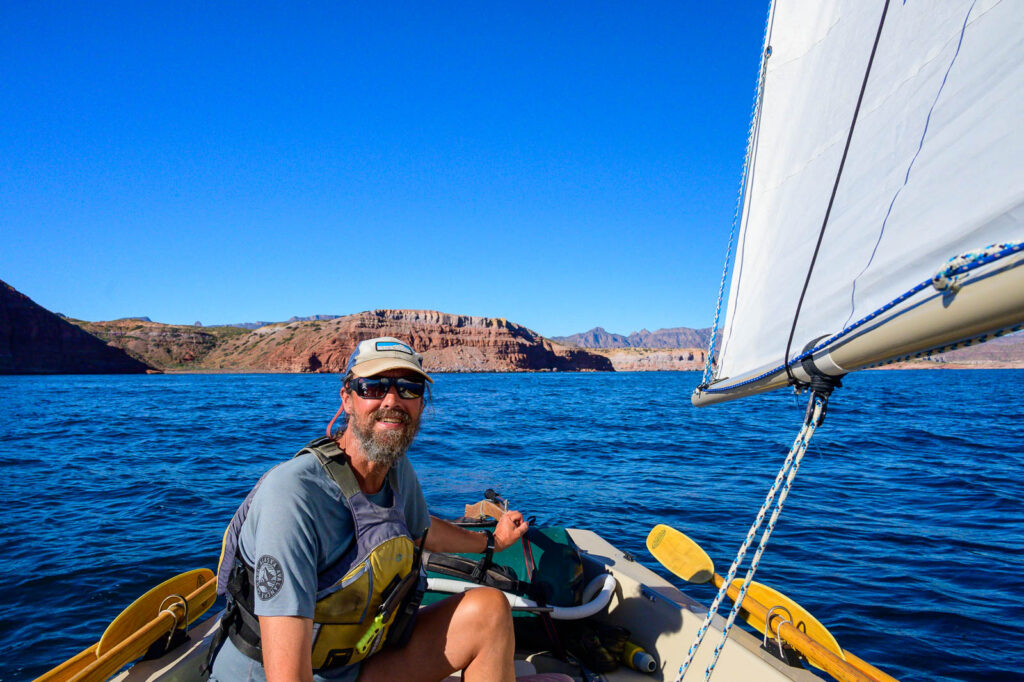
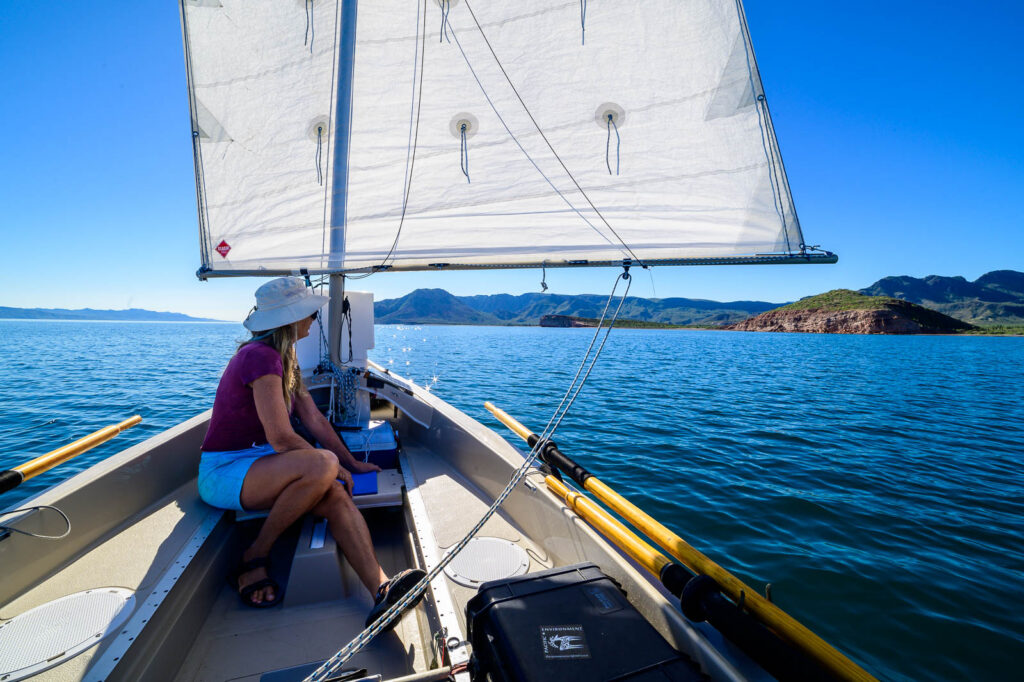
We launched at dawn. Winds were light, but predicted to increase. By now, we had a practiced progression. Starting at full sail, if the winds picked up, we put in one reef. Then we double reefed. If we still had too much power, we dropped sail and started rowing. Our final option, for big following seas, involved one person rowing with the other person on the tiller steering. This allowed the person on the oars to keep the boat going slow enough to avoid surfing by using an occasional back stroke.
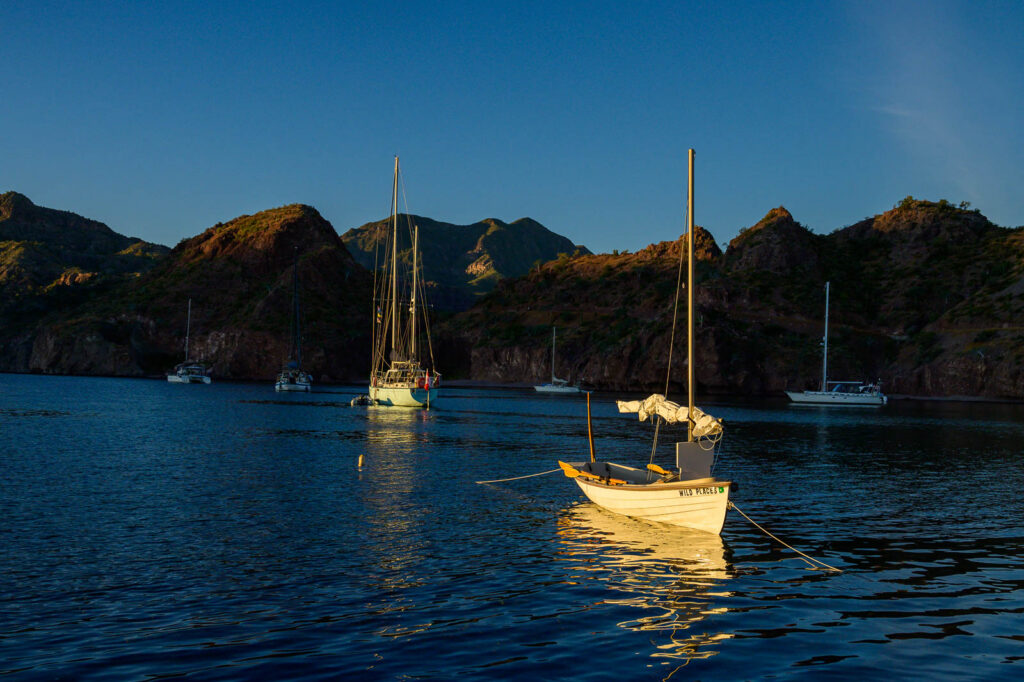
On our first day out of Loreto, we worked through the whole progression while counting the miles to our first protected spot. Due to the constricting nature of the topography, the sea state increased dramatically as we neared the point just outside Puerto Escondido. Inside this well-known sanctuary were probably 70 sailboats. We weren’t excited to join them, but we definitely needed a port. With heightened concentration, but not fear, we slipped around the point in three to four-foot seas.
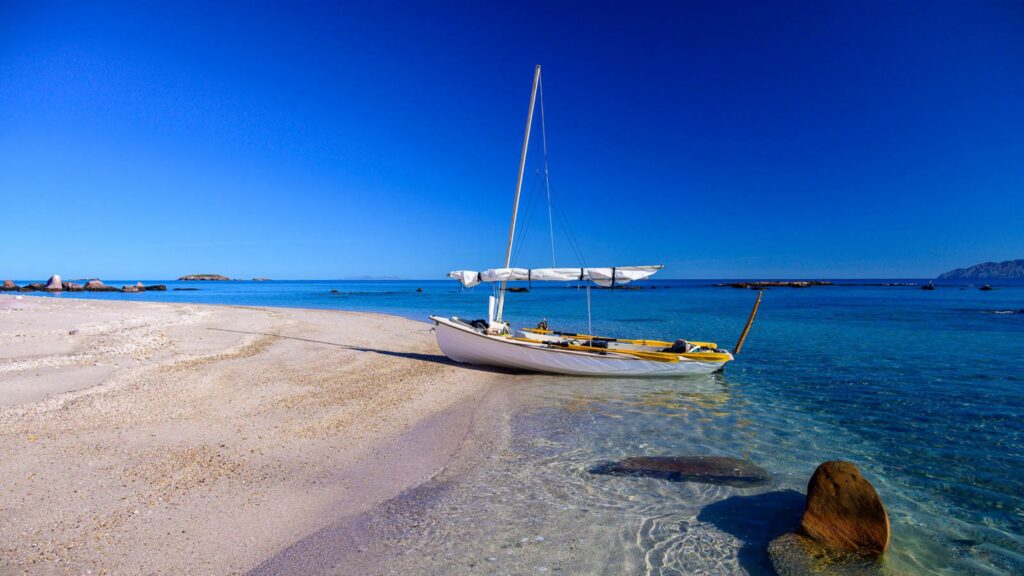
Instantly, it was over. We entered a world of calm, crystal blue water and diving pelicans. A tiny beach, just big enough for us, was just ahead. We landed on a minute corner of sand. Once again, we were glad to be small.
Coral Reefs and the Milky Way
Over the next few days, we covered miles rapidly. Compared with last year, I was less seasick and more confident. Power struggles and differences of opinion between us usually got worked out ahead of time, and nearly always resolved themselves to the most prudent alternative. Aware that we were indeed living in precious times, we walked unspoiled beaches and slept to the whisper of lapping waves. We soaked in a tidewater hot springs as the Milky Way blazed overhead. I wondered how many people on Earth can no longer see the Milky Way because of light pollution?
The next day, we went snorkeling and discovered an abundance of coral. Was it the influx of warm water from the hot springs, or just our southern latitude, that put us at water temperatures warm enough for coral to thrive? We swam without wetsuits in water that had been significantly cooler a year ago. Much of the world’s coral reefs are getting too hot, dying off, and leaving a collection of gray ghostly skeletons. Much to my delight, this reef looked colorful and healthy to my untrained eyes.
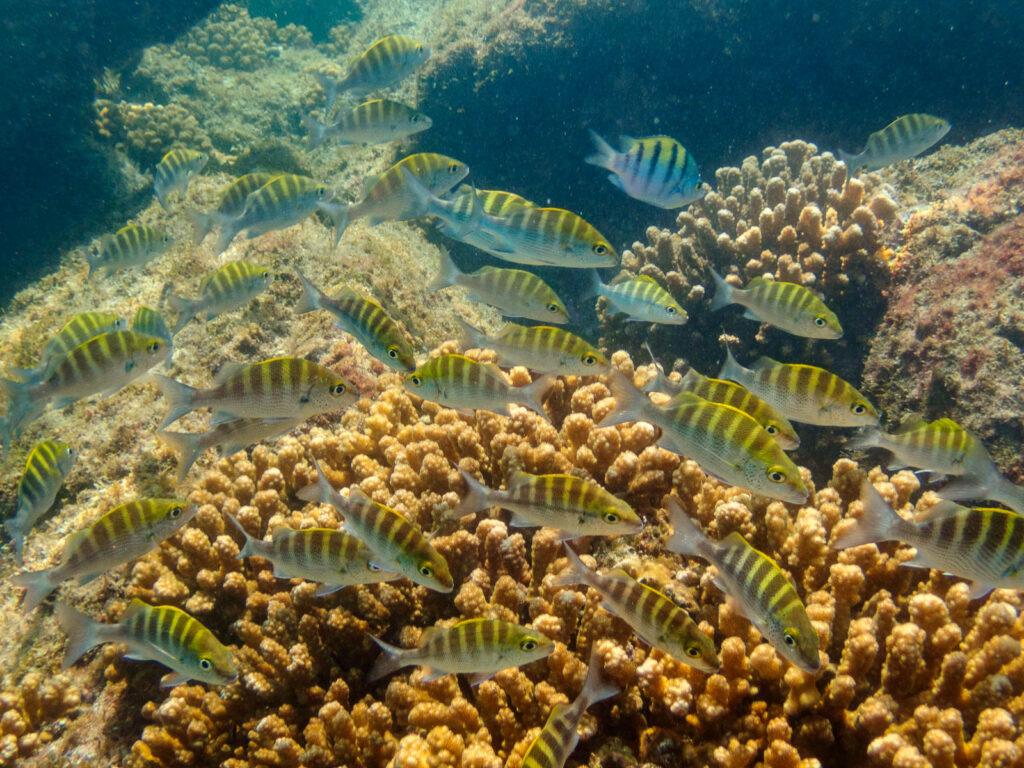
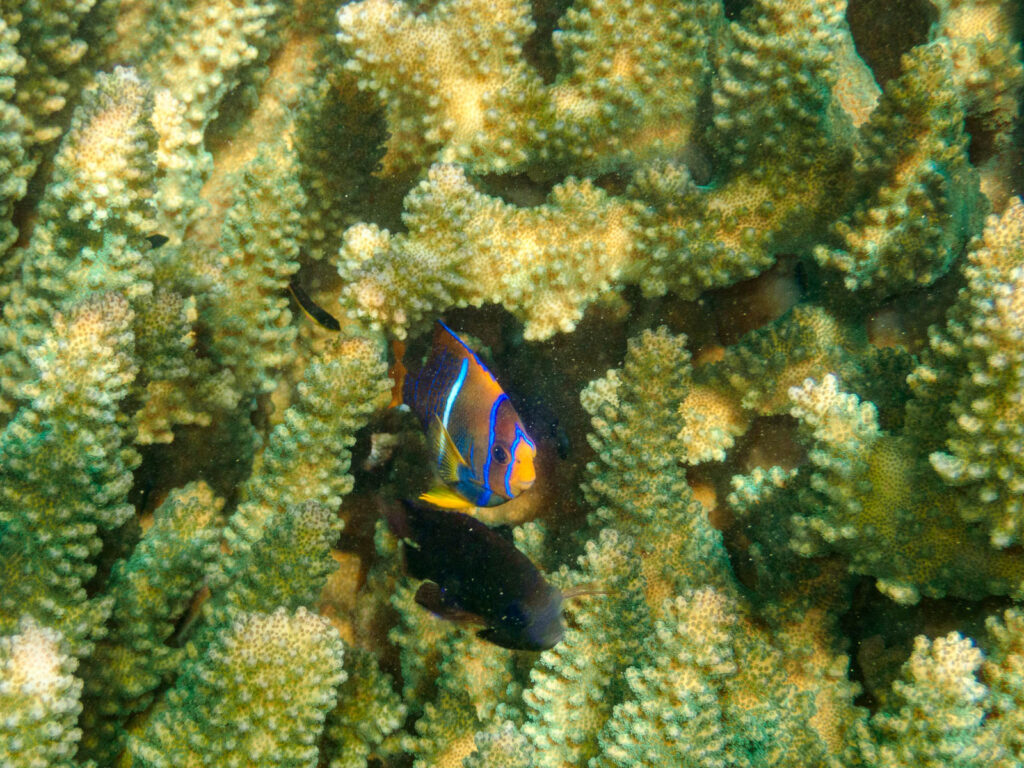
The amazing array of green stony corals and orange and red fan corals looked like an underwater garden. However, corals are not plants, but animals, or should I say colonies of tiny animals known as polyps. In the Gulf of California, the intricate structure of coral reefs, built up with the skeletons of generations of coral polyps, provides critical habitat for over 800 species of fish. Serving as nurseries, these areas help to repopulate the ocean. We were careful not to anchor our boat in areas with coral!
A Dorado and a Birthday
That afternoon turned into a long, hot row followed by the laziest of possible sails. After years of wondering if Wild Places had more sail than we really needed—or were able to handle—we were finally glad for every square inch of cloth we had. We were trailing a barely moving fishing lure. Fresh fish was always a welcome addition to our diet, but we didn’t have much hope midday on a hot afternoon.
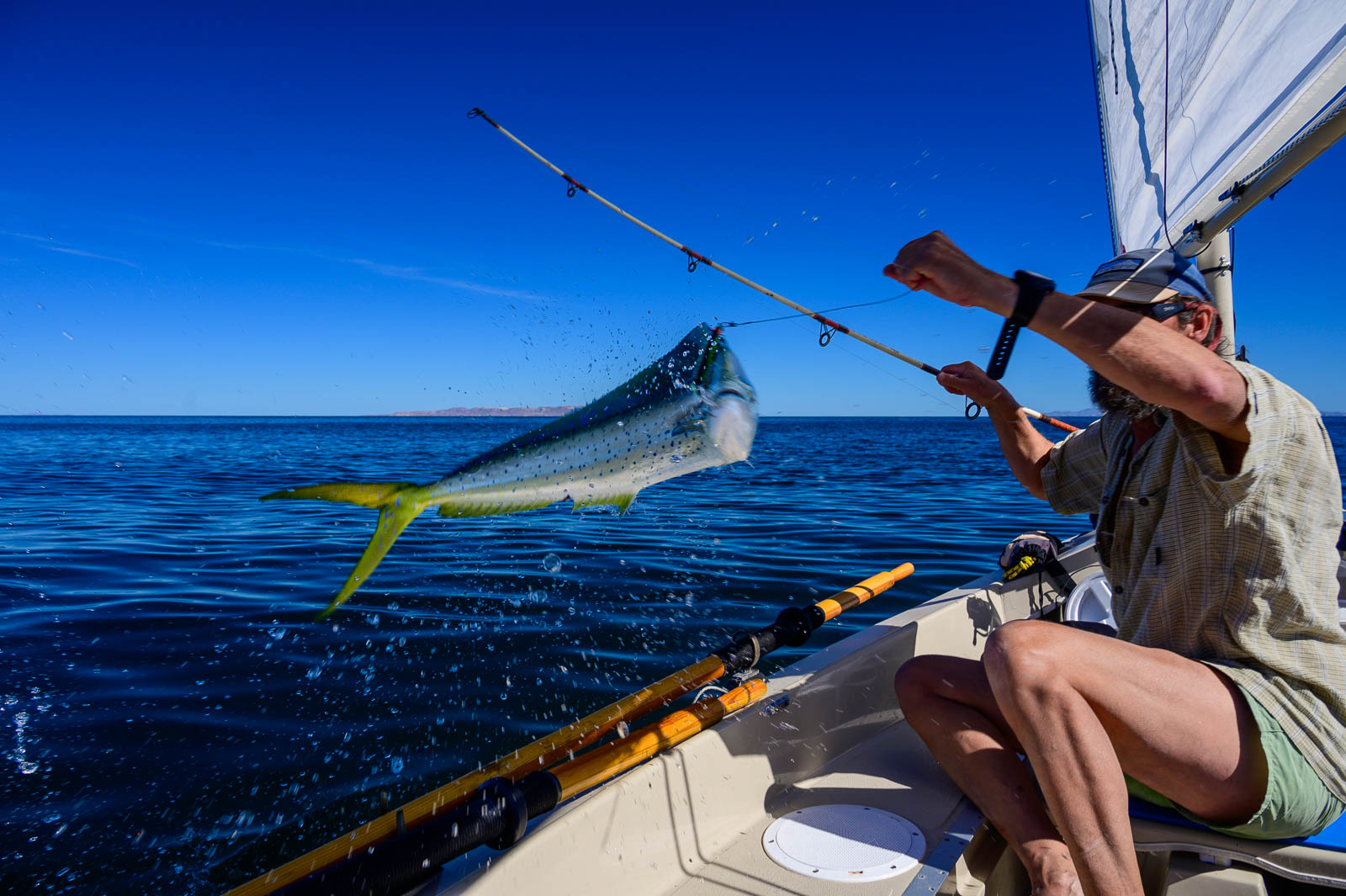
“Whoa, I’ve got a fish,” said Fredrik, as he untangled the fishing line from the oars.
I watched the water for the first flash of fish. A long, thin greenish body, a big head, and fluorescent blue fins broke the water.
“It’s a Dorado!” I hollered. I could tell it was a male by the bulbous shape of his head.
With winds this light, sailing didn’t require my full attention. I grabbed the camera. Fredrik lurched barehanded for the steel leader and missed.
“Oh no!” I said.
I thought our fish—which was obviously never really our fish—had gotten away. But, somehow, he was still there. Fredrik grabbed again for the leader. Fish fully in the air, that fish and I locked eyes for a precious 1/250th of a second, and I snapped a shot.
Once again, we had a big, beautiful fish aboard and no ice. However, the small village of Agua Verde was only a few miles ahead. When we arrived, Fredrik brought the boat in as close as he could to the beach in fairly big surf. I leaped overboard with fish in hand. After watching my soaking wet, surf entry into town, one of the patrons of the little palapa restaurant on the beach commented, “Young people these days.” I laughed out loud. Was he joking? I am 66 years old.
The restaurant owners recognized us from our trip last year. They happily gave us ice and froze half of the fish for us. I gave them the other half in return. The next day, Fredrik and I celebrated his 60th birthday with freshwater showers and a shrimp dinner at the same palapa restaurant.
Into New Territory
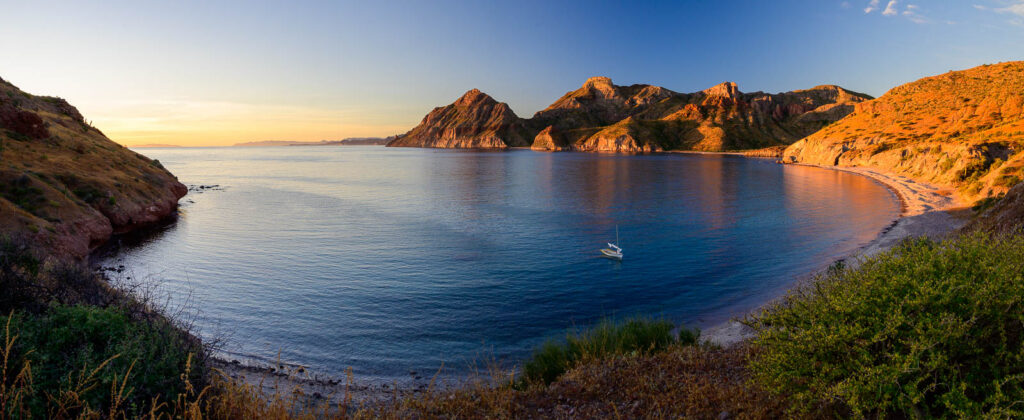
Beyond here was new territory. The north winds picked up every day around noon. We traveled a few hours in the morning and swam, snorkeled, and walked the beaches each afternoon.
We spent hours a day in the water, observing the lives of purple box fish, iridescent blue-green parrot fish, and orange and black angel fish. To us, these fish seemed strikingly beautiful, maybe even gaudy, as if they were trying to get your attention. However, I am learning that, due to fish having color receptors that differ from ours, these tropical fish look entirely different—maybe even camouflaged—to each other. Under a huge overhang, I noticed a big eye. Upon focusing my two eyes, a sloped forehead and a pair of big lips appeared. A giant hawk fish, dressed in green and tan army camouflage, stared out at a very strange sight indeed: a person with a mask over her eyes breathing out of a long tube.
One morning, we pulled the anchor to find it covered with a slew of tiny gelatinous beings. Upon closer inspection, the mass of beings on our anchor was in the process of being born. A tangle of string-like eggs was emerging, as if from nowhere, all over the anchor chain. I hated to interfere with whatever was going on here. A few clear threads of gelatinous life fell back into the sea. Most of them I picked off the anchor and tossed back in myself. A few fell into the hold where I hoped they would stay warm, moist, and alive until we dropped anchor again.
I reconciled myself to the fact that if we were transporting species, at least we weren’t taking them far. What, or who, these beings were, I did not know. A local biologist might be able to tell us, but the mind-bending reality is that maybe nobody knows. Millions of tiny species exist in the ocean that are still unknown to science.
El Gato — and the Beach We Preferred
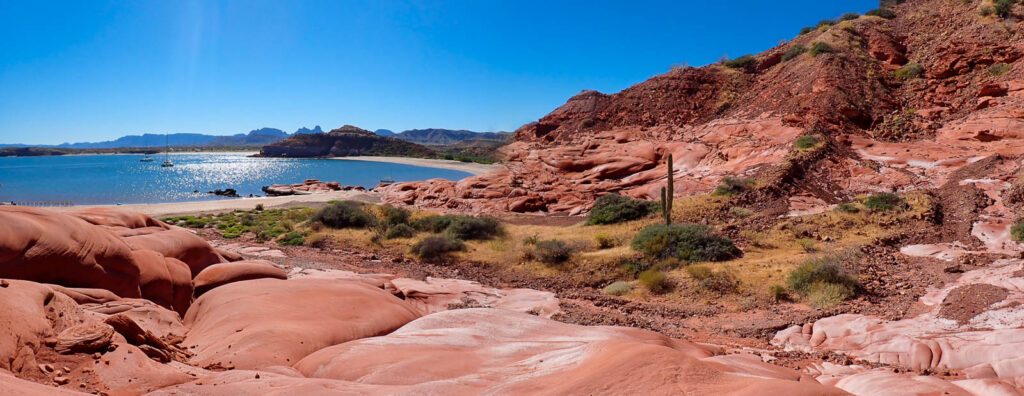
After days of crawling down the coast at a few miles a day, we needed to make a big move. With hopes of good weather, we took off for what we had heard was a spectacular spot, El Gato.
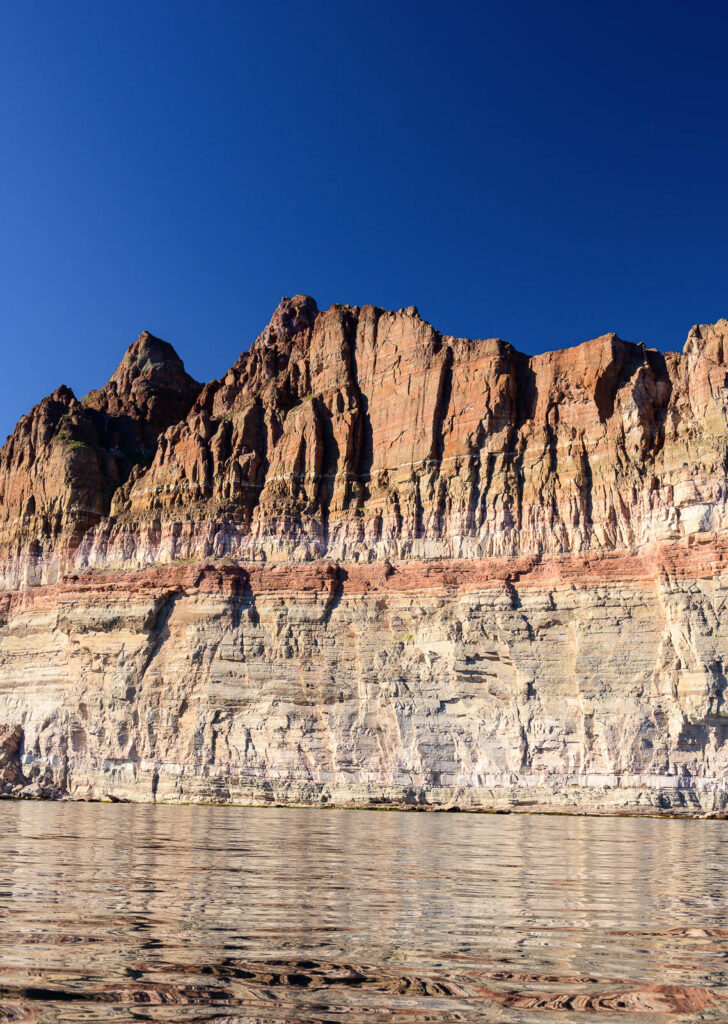
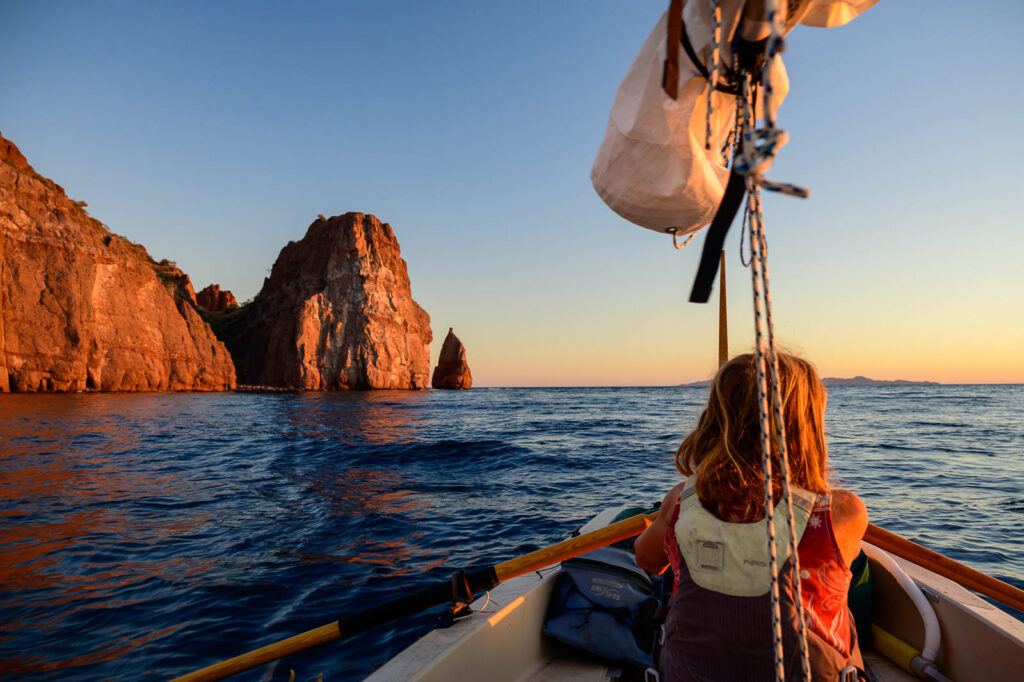
When we arrived, red sandstone in a multitude of intriguing shapes slipped into a calm, aquamarine bay. We wandered around on the rock formations, taking pictures, but found no shade on a blistering hot day. We tried to ply the owner of a large catamaran for a weather forecast. He answered that the weather was predicted to be “Nice.” I suspected that the exact windspeed wasn’t as critical to him as it was to us, and let it be. Meanwhile, a—not-so-mini—cruise ship was disgorging passengers, and the guides were setting up lunch and dozens of beach chairs. Gorgeous as it was, the place was crowded by our standards.
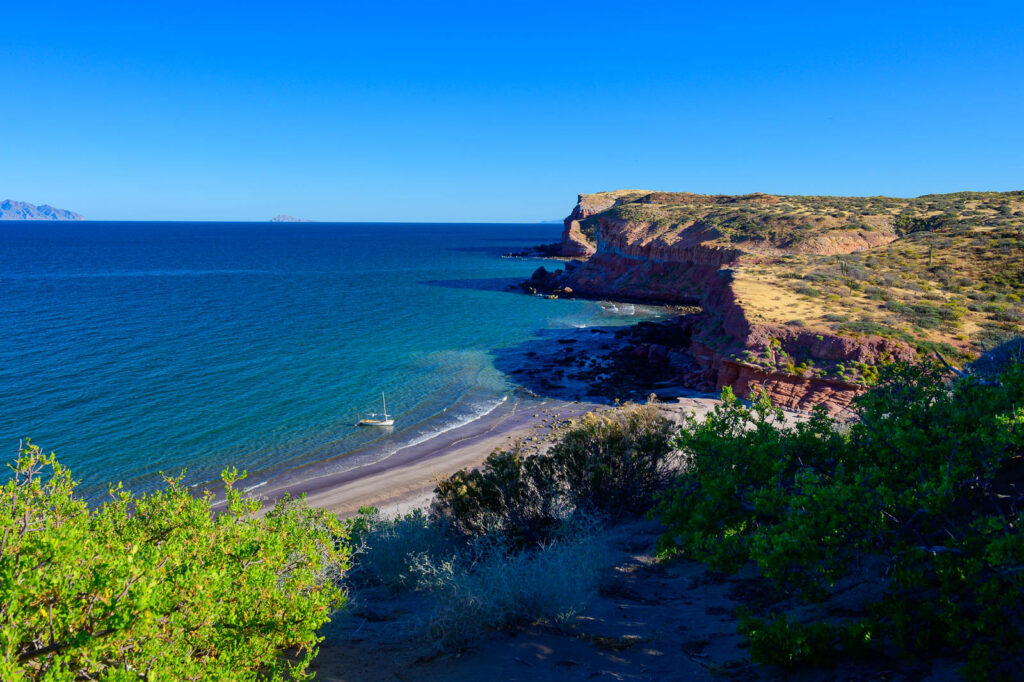
A mile and a half behind us, we had noticed a similar beach, with less protection, but with the same amazing rock formations. We hoisted sail and turned back north, tacking upwind into a stiff breeze. A tiny deserted beach welcomed the two of us to a night under the stars. Once again, we were happy with the Salish Voyager’s ability to slip into these special spots.
Tides, Tacks, and a Perfect Beach
With no wind overnight, we were surprised to find surf on our beach the next morning. Somewhere out there, wind was creating waves, and Wild Places was at anchor beyond the surf. By keeping tension on both the seaward and landward sides of our pulley system, we kept her perpendicular to the beach and brought her just outside the surf. We waded out and loaded up. Soon, we were tacking again. This time into a south wind. We laughed at our luck, but sailing was sailing, and we were grinning.
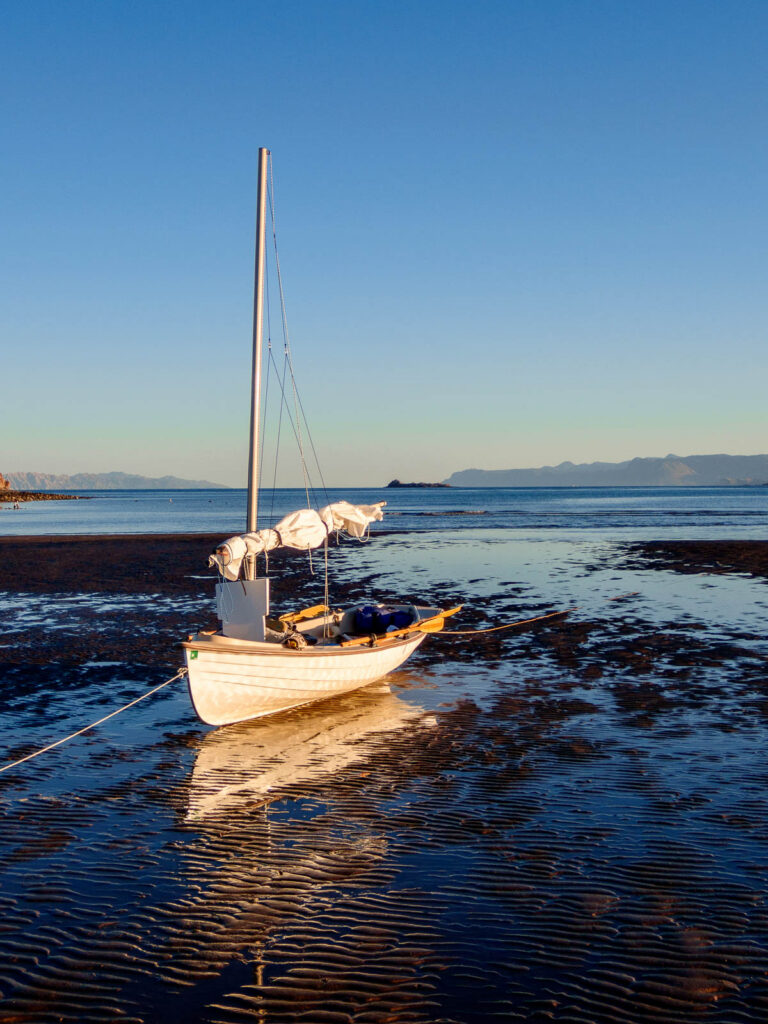
Our next stop, Timbabichi, had long tidal flats. In places like this it was easiest to just let her go dry. The tide would be high again the next morning. Because of the long, thin nature of the Gulf of California, the incoming tide cancels out the outgoing tide each day, so this part of Baja appears to have only one high and one low tide each day.
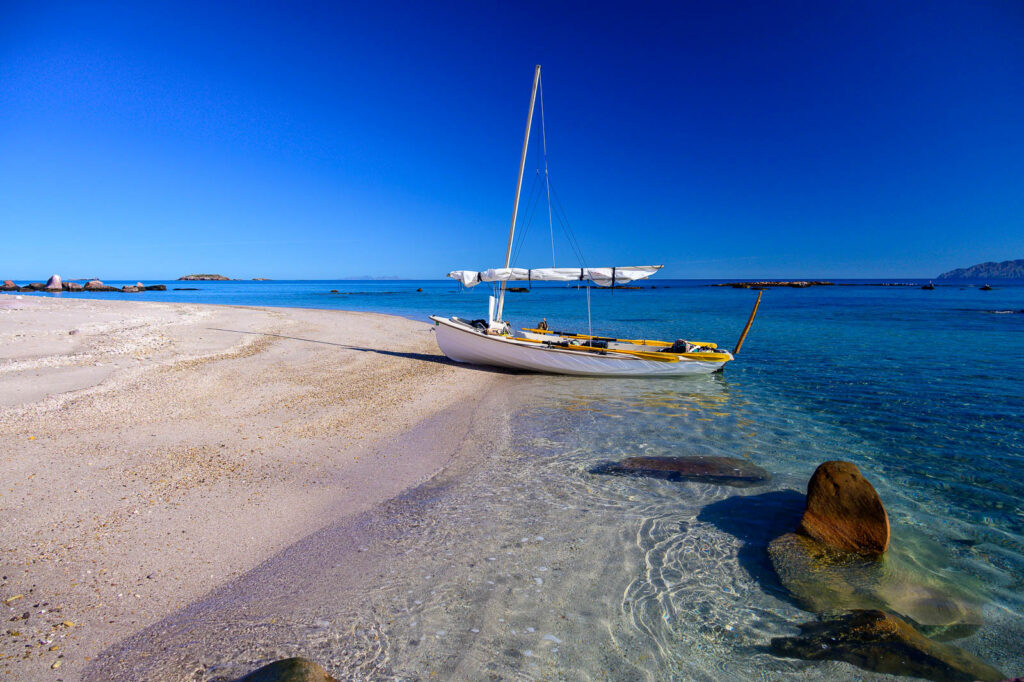
Only a few miles into our travels the next day, a white sand beach with another group of spectacular rock formations called for a closer look.
“Let’s row in closer,” I said.
“This place is amazing. Let’s pull out,” said Fredrik.
Intriguing snorkeling asked us to stay awhile. A short beach exploration begged for a longer hike.
“Let’s just camp here,” said Fredrik. And we did.
This was exactly what we love most about traveling the way we do, completely self-sufficient and without a schedule.
Halfway to La Paz
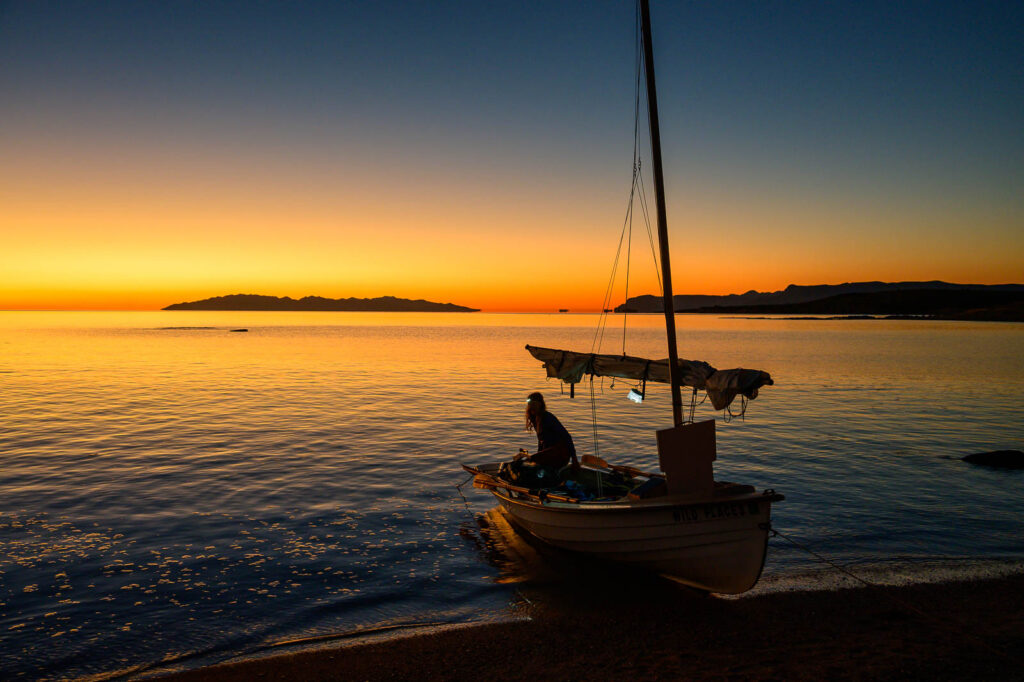
Our next stop was Rancho Dolores. We were halfway to La Paz. It was December 21st, the winter solstice. We didn’t notice the changing daylight much in Baja, but as Alaskans, this is an important day to us. Later, when we reconnected with the outer world, friends would tell us that back home in Alaska, it was 20 degrees below zero with 80 mph winds. For us, the weather had been fantastic. Still, with weeks to go, I doubted this perfect life could last. As we rowed, a line from a song by the band Rosewood kept bubbling to the top of my mind.
Stay tuned for the next chapter of Wild Places photojournal as they continue their winter journey in the waters of Baja. In the meantime, you can read the backstory on Fredrick and Nancy’s Alaska journey from the beginning here.
Learn more about the 17′ Salish Voyager here.
If you enjoy reading about Nancy’s adventures, you can learn about her journey on horseback through Patagonia HERE. A second edition of her book, Riding Into the Heart of Patagonia, was released in March.